Ralph W. Moss, Ph.D.
See book keywords and concepts |  Although some dietary approaches (such as macrobiotics) continue to be listed on the unproven methods list, the Society itself now advocates some special foods, such as the cruciferous family of vegetables (cabbage, broccoli, brussel sprouts, kohlrabi, and cauliflower) to prevent cancer. This is a far cry from the days when anticancer diets were considered the very hallmark of quackery.
But beyond these largely verbal measures, little is done to stop the incidence of cancer before it occurs. Although some dietary approaches (such as macrobiotics) continue to be listed on the unproven methods list, the Society itself now advocates some special foods, such as the cruciferous family of vegetables (cabbage, broccoli, brussel sprouts, kohlrabi, and cauliflower) to prevent cancer. This is a far cry from the days when anticancer diets were considered the very hallmark of quackery.
But beyond these largely verbal measures, little is done to stop the incidence of cancer before it occurs. |
Patrick Quillin, PhD,RD,CNS
See book keywords and concepts |  Also, a number of nutrition factors help to reduce the tumor-enhancing capacity of hormones, including fish oil, evening primrose oil, cruciferous sulforphane, calcium D-glucarate, and others.
BIOENERGETICS: AEROBIC VS ANAEROBIC
Cancer cells are anaerobic sugar feeders, while healthy cells are aerobic (oxygen-requiring) cells that can burn sugar, protein or fats. Professor Otto Warburg was awarded the Nobel prize in medicine in 1931 for his work in cell respiration and received a second Nobel prize in 1944 for his work in electron transfer. Also, a number of nutrition factors help to reduce the tumor-enhancing capacity of hormones, including fish oil, evening primrose oil, cruciferous sulforphane, calcium D-glucarate, and others.
BIOENERGETICS: AEROBIC VS ANAEROBIC
Cancer cells are anaerobic sugar feeders, while healthy cells are aerobic (oxygen-requiring) cells that can burn sugar, protein or fats. Professor Otto Warburg was awarded the Nobel prize in medicine in 1931 for his work in cell respiration and received a second Nobel prize in 1944 for his work in electron transfer. |
James A. Duke, Ph.D.
See book keywords and concepts |  If I had macular degeneration or any risk factors for it, I'd dine regularly on my Cruci-Fix, a steamed mixture of all the cruciferous vegetables I had on hand.
VV Ginkgo (Ginkgo biloba). Ginkgo extracts help maintain good blood flow to the retina.
In one six-month study, people who received 80 milligrams of a standardized ginkgo extract twice daily significantly improved their long-distance vision. Another study suggests that ginkgo extract may even reverse damage in the retina. To me this suggests that you should try mixing ginkgo with antioxidant mint teas. If I had macular degeneration or any risk factors for it, I'd dine regularly on my Cruci-Fix, a steamed mixture of all the cruciferous vegetables I had on hand.
VV Ginkgo (Ginkgo biloba). Ginkgo extracts help maintain good blood flow to the retina.
In one six-month study, people who received 80 milligrams of a standardized ginkgo extract twice daily significantly improved their long-distance vision. Another study suggests that ginkgo extract may even reverse damage in the retina. To me this suggests that you should try mixing ginkgo with antioxidant mint teas. |
Elson M. Haas, M.D.
See book keywords and concepts |  Because of their beta-carotene and selenium levels, vegetables are thought to help reduce cancer rates. The cruciferous family vegetables, such as broccoli, brussels sprouts, and cauliflower, have a further anticancer effect, though the exact mechanism has not yet been determined.
The most nutritious way to eat vegetables is fresh and raw. But raw vegetables eaten in too much quantity are harder for some people to chew and digest and can produce intestinal gas. Because of their beta-carotene and selenium levels, vegetables are thought to help reduce cancer rates. The cruciferous family vegetables, such as broccoli, brussels sprouts, and cauliflower, have a further anticancer effect, though the exact mechanism has not yet been determined.
The most nutritious way to eat vegetables is fresh and raw. But raw vegetables eaten in too much quantity are harder for some people to chew and digest and can produce intestinal gas. |
James A. Howenstine, MD
See book keywords and concepts |  Eat lots of cruciferous vegetables, which contain glutathione. This group includes Brussels sprouts, cauliflower, broccoli, cabbage, kale, bok choy, cress, mustard, horseradish, turnips, rutabagas, and kohlrabi. These same vegetables contain indole-3-carbinol that inactivates estrogen. This may explain why persons eating these vegetables have a lower incidence of cancer of the breast, prostate, lungs, esophagus, bladder and especially the colon.
Tests to measure GTH blood levels are very difficult to do because GTH is quickly oxidized when exposed to light, heat, and air. Eat lots of cruciferous vegetables, which contain glutathione. This group includes Brussels sprouts, cauliflower, broccoli, cabbage, kale, bok choy, cress, mustard, horseradish, turnips, rutabagas, and kohlrabi. These same vegetables contain indole-3-carbinol that inactivates estrogen. This may explain why persons eating these vegetables have a lower incidence of cancer of the breast, prostate, lungs, esophagus, bladder and especially the colon.
Tests to measure GTH blood levels are very difficult to do because GTH is quickly oxidized when exposed to light, heat, and air. |
Ralph W. Moss, Ph.D.
See book keywords and concepts |  Frequent consumption of citrus fruits and carotene-rich and cruciferous vegetables, was also "definitely associated with a lower incidence of cancer of various types" (15).
In 1984, the American Cancer Society (ACS) decided that a large proportion of new cancer cases could be avoided if seven dietary guidelines were followed. Large-scale education programs were developed for young people, the media and the general public. These guidelines were reaffirmed in 1989 (16). Frequent consumption of citrus fruits and carotene-rich and cruciferous vegetables, was also "definitely associated with a lower incidence of cancer of various types" (15).
In 1984, the American Cancer Society (ACS) decided that a large proportion of new cancer cases could be avoided if seven dietary guidelines were followed. Large-scale education programs were developed for young people, the media and the general public. These guidelines were reaffirmed in 1989 (16). | | Since there is a strong association between estrogen metabolism and the incidence of breast cancer, the Rockefeller scientists also fed indoles, obtained from cruciferous vegetables such as cabbage and broccoli, to 12 healthy human volunteers for 7 days. Using three very sensitive tests, they found a decrease in harmful hormones by 50 percent during this short time of exposure. These results indicate that this compound "may provide a novel 'dietary' means for reducing cancer risk," they wrote in 1991 (4).
German scientists have modified indoles to make them into anticancer drugs. |
Committee on Comparative Toxicity of Naturally Occurring Carcinogens
See book keywords and concepts |  Most extensively studied have been members of the cruciferous, allium, and tea families, which were effective in rodents preventing cancers at numerous sites, including esophagus, colon, lung, breast, and skin. There is evidence that some of the inhibition of cancer by fruits and vegetables is due to the essential nutrient vitamins A, C, E, and selenium. There have also been extensive investigations of the particular chemical compounds present in fruits and vegetables, as shown in Appendix C. Most extensively studied have been members of the cruciferous, allium, and tea families, which were effective in rodents preventing cancers at numerous sites, including esophagus, colon, lung, breast, and skin. There is evidence that some of the inhibition of cancer by fruits and vegetables is due to the essential nutrient vitamins A, C, E, and selenium. There have also been extensive investigations of the particular chemical compounds present in fruits and vegetables, as shown in Appendix C. |
John Boik
See book keywords and concepts |  SUMMARY
Numerous non-nutrient dietary factors, such as those from the Allium sp. and cruciferous vegetables, may play key roles in preventing cancer. Since anticancer compounds may be widely distributed, it may be prudent for humans to maintain a diverse diet.
A number of non-nutrient dietary factors may also be useful in treating cancer. These include certain phytoestrogens, phytosterols, saponins, flavonoids, protease inhibitors, isoflavones, and lignans. SUMMARY
Numerous non-nutrient dietary factors, such as those from the Allium sp. and cruciferous vegetables, may play key roles in preventing cancer. Since anticancer compounds may be widely distributed, it may be prudent for humans to maintain a diverse diet.
A number of non-nutrient dietary factors may also be useful in treating cancer. These include certain phytoestrogens, phytosterols, saponins, flavonoids, protease inhibitors, isoflavones, and lignans. |
Michael Lerner
See book keywords and concepts |  In 1984, the American Cancer Society added to these recommendations: "eat more high fiber foods; include foods rich in vitamins A and C; include cruciferous vegetables; and avoid obesity."4
And in the most recent edition of Cancer: Principles and Practice of Oncologyf much of the same basic information appears as dietary guidelines from the National Cancer Institute:
1. Reduce fat to 30% of calories or less.
2. Increase fiber intake to 20 to 30 gm/day, with an upper limit of 35 gm/day.
3. Include a variety of vegetables and fruit in the daily diet.
4. Avoid obesity.
5. In 1984, the American Cancer Society added to these recommendations: "eat more high fiber foods; include foods rich in vitamins A and C; include cruciferous vegetables; and avoid obesity."4
And in the most recent edition of Cancer: Principles and Practice of Oncologyf much of the same basic information appears as dietary guidelines from the National Cancer Institute:
1. Reduce fat to 30% of calories or less.
2. Increase fiber intake to 20 to 30 gm/day, with an upper limit of 35 gm/day.
3. Include a variety of vegetables and fruit in the daily diet.
4. Avoid obesity.
5. |
John Boik
See book keywords and concepts | | Orally administered indoles from cruciferous vegetables prevent the development of multidrug resistance in chemotherapy-treated mice (Christensen and Le-Blanc, 1996).
Some non-nutrient factors may inhibit both carcinogenesis and the growth of established tumors. For example, ingestion of cabbage and collards decreased lung metastasis in animals injected intravenously with mammary tumor cells (Scholar et al, 1989). Limonene is another example of a non-nutrient compound that inhibits both carcinogenesis and tumor growth. |
Patrick Quillin, PhD,RD,CNS
See book keywords and concepts | | Of the various fractions in cruciferous plants, including indole-3-carbinol, isothiocyanates, glucosinolates, dithiolethiones and phenols; they are able to:64 0 Prevent chemicals from being converted into cancer-causing compounds
0- Induce liver detoxification systems, such as glutathione S-transferase and P-450, to help rid the body of poisons. 0 Scavenge free radicals, thus working as an antioxidant. 0 Prevent tumor promoters from reaching their cell targets, such as blocking the binding of estrogen to estrogen-dependent tumors. | | Among the phytochemicals in cruciferous vegetables that have been researched, sulforaphane is one of the more promising as a cancer fighter. It was Professor Lee Wattenburg of Minnesota who found that cabbage extract has the ability to prevent the initiation and promotion of cancer cells. |
Earl Mindell and Hester Mundis
See book keywords and concepts |  Other cruciferous vegetables that are presumed to contain indoles and isothiocyanates include bok choy, collards, kale, kohlrabi, mustard greens, rutabaga, and turnips.
Foods rich in beta-carotene are carrots, cantaloupe, squash, papaya, and sweet potatoes.
Quercetin, which may suppress malignant cells before they become tumors, is found in onions (and not destroyed by cooking).
Foods rich in omega-3 fatty acids, such as salmon, tana, and sardines, help the immune system prevent and inhibit spreading cancers. Other cruciferous vegetables that are presumed to contain indoles and isothiocyanates include bok choy, collards, kale, kohlrabi, mustard greens, rutabaga, and turnips.
Foods rich in beta-carotene are carrots, cantaloupe, squash, papaya, and sweet potatoes.
Quercetin, which may suppress malignant cells before they become tumors, is found in onions (and not destroyed by cooking).
Foods rich in omega-3 fatty acids, such as salmon, tana, and sardines, help the immune system prevent and inhibit spreading cancers. |
Rebecca Wood
See book keywords and concepts |  It is an excellent source of vitamins A and C as well as the numerous phytonutrients common to the cruciferous (cabbage) family.
Use Bok choy stems are juicy and sweet and take a few minutes longer to cook than the mild-tasting greens. Delicious in stir-fries and soups, bok choy leaves are also used as a vegetable wrap for food morsels. If the plant is flowering, use the flowers as well.
Buying There are several varieties of bok choy, including baby types with up to 12-inch-long stemmed heads. The most common have white stalks, but one Shanghai variety has a green stalk. It is an excellent source of vitamins A and C as well as the numerous phytonutrients common to the cruciferous (cabbage) family.
Use Bok choy stems are juicy and sweet and take a few minutes longer to cook than the mild-tasting greens. Delicious in stir-fries and soups, bok choy leaves are also used as a vegetable wrap for food morsels. If the plant is flowering, use the flowers as well.
Buying There are several varieties of bok choy, including baby types with up to 12-inch-long stemmed heads. The most common have white stalks, but one Shanghai variety has a green stalk. |
Ralph Moss, PhD
See book keywords and concepts |  Thus, the Roman author Cato advocated the crushed leaves of cabbage as a treatment for cancer, 2,000 years before the discovery that cruciferous vegetables, and especially cabbage, contain powerful anticancer elements. The famous ancient physician Galen worked out a comprehensive diet for cancer patients, which included poultry, vegetables, fish and red wine—all substances now known on scientific grounds to be beneficial to cancer patients.
When vitamins were discovered a century or so ago there was considerable interest in trying them out in cancer. Thus, the Roman author Cato advocated the crushed leaves of cabbage as a treatment for cancer, 2,000 years before the discovery that cruciferous vegetables, and especially cabbage, contain powerful anticancer elements. The famous ancient physician Galen worked out a comprehensive diet for cancer patients, which included poultry, vegetables, fish and red wine—all substances now known on scientific grounds to be beneficial to cancer patients.
When vitamins were discovered a century or so ago there was considerable interest in trying them out in cancer. |
Mark Stengler, N.D.
See book keywords and concepts |  These carotenoids | are also found in orange and yellow types of squash.
If cruciferous vegetables including broccoli, cauliflower, cabbage, Brussels sprouts, and kale contain various antioxidants. (They also have cancer-preventing phytonutrients such as indoles and sulforaphane.)
If Garlic and onions have antioxidants that help prevent cancer and heart disease.
If Tomatoes are rich in the antioxidant lycopene that helps to prevent prostate cancer.
If Tea contains polyphenols, potent antiox- I idants that protect humans against can-cer and heart disease. These carotenoids | are also found in orange and yellow types of squash.
If cruciferous vegetables including broccoli, cauliflower, cabbage, Brussels sprouts, and kale contain various antioxidants. (They also have cancer-preventing phytonutrients such as indoles and sulforaphane.)
If Garlic and onions have antioxidants that help prevent cancer and heart disease.
If Tomatoes are rich in the antioxidant lycopene that helps to prevent prostate cancer.
If Tea contains polyphenols, potent antiox- I idants that protect humans against can-cer and heart disease. |
Dr. Mary Dan Eades
See book keywords and concepts |  These include beta-carotene, quercetin, indoles and thiocyanates (in cruciferous vegetables), and omega-3 fatty acids. Recommendation: Eat an abundance of carrots, cantaloupe, squash, broccoli, cauliflower, onions, and tuna.
• Phytochemicals are naturally occurring substances in plants that protect the body against cancer. Cancer formation is a multi-step process, and phytochemicals block one or more of those steps. Almost every grain, legume, fruit, and vegetable has been found to contain these substances. Recommendation: Base your meals around fruits, vegetables, and grains. These include beta-carotene, quercetin, indoles and thiocyanates (in cruciferous vegetables), and omega-3 fatty acids. Recommendation: Eat an abundance of carrots, cantaloupe, squash, broccoli, cauliflower, onions, and tuna.
• Phytochemicals are naturally occurring substances in plants that protect the body against cancer. Cancer formation is a multi-step process, and phytochemicals block one or more of those steps. Almost every grain, legume, fruit, and vegetable has been found to contain these substances. Recommendation: Base your meals around fruits, vegetables, and grains. | | Glucosinates
These phytochemicals are found in cruciferous vegetables and help detoxify the liver. They also regulate white blood cells and cytokines. White blood cells scavenge the immune system while cytokines act as messengers, coordinating the activities of all immune cells. Glucosinates block enzymes that promote tumor growth, especially in the breast, liver, colon, lung, stomach, and esophagus.
Allylic Sulfides
You know these phytochemicals as garlic and onion. Leeks, shallots, and chives are also included in this category. |
Earl Mindell
See book keywords and concepts |  Omega-3 fatty acids, magnesium, calcium; cruciferous vegetables (broccoli, cabbage, kale), celery; vitamin C, potassium (not for anyone with a kidney disorder); dong quai, Siberian ginseng. Rice, bananas, and lactobacillus acidophilus yogurt for diarrhea caused by antibiotics. Vitamins Bl and B6 can help alleviate nausea due to motion or morning sickness; ginger root capsules; Ev.Ext-33. Niacin, bioflavonoids, and standardized ginkgo biloba can help in the treatment of dizziness and queasiness due to diseases of the inner ear. Omega-3 fatty acids, magnesium, calcium; cruciferous vegetables (broccoli, cabbage, kale), celery; vitamin C, potassium (not for anyone with a kidney disorder); dong quai, Siberian ginseng. Rice, bananas, and lactobacillus acidophilus yogurt for diarrhea caused by antibiotics. Vitamins Bl and B6 can help alleviate nausea due to motion or morning sickness; ginger root capsules; Ev.Ext-33. Niacin, bioflavonoids, and standardized ginkgo biloba can help in the treatment of dizziness and queasiness due to diseases of the inner ear. | | Considering that broccoli is a cruciferous, cancer-fighting vegetable, this is something you'll want to look for when making your selection.
166. Any Questions About Chapter XI?
I feed my children what I think is a pretty well-balanced diet. But they're teenagers and when they're out they often have burgers, hot dogs, shakes, and that sort of junk food. Are these really bad for them?
Well, ounce for ounce, munch for munch, and sip for sip, the bad far outweighs the good. For instance, a fast-food burger can supply 44 percent of a teenage boy's requirement for protein. | | I'd suggest you supplement your diet with vitamin E (200-400 IU daily) to help prevent lipid peroxidation (fats rusting in the body); avoid products containing hydrogenated oils; increase your intake of cruciferous vegetables; and switch your polyunsaturated oils for monounsaturated ones, such as olive and canola.
Are lipotropics available as supplements, and if so, what's the recommended dosage and are there any special instructions for taking them?
Lipotropics are available as supplements in tablet form. (Usually 3 tablets equal 1,000 mg.—or 1 gram of each lipotropic agent. | | See "Cautions" in section 334.) A cruciferous vegetable that contains indoles and isothiocyanates (substances that help reduce and prevent certain cancerous tumors); rich in carotenoids.
Same as broccoli and other crucifers.
Same as broccoli and other crucifers.
Same as broccoli and other crucifers.
Same as broccoli and other crucifers. | | Corn bran
• cruciferous vegetables (broccoli, cauliflower)
• Eggplant
• Evening primrose oil (Contains gamma-linolenic acid [GLA]. I'd suggest 250 mg. 1-3 times daily.)
• Evolve® (Contains tocotrienols extracted from rice bran. Recommended dosage is 1-2 25 mg. capsules daily. NOTE: Vitamin E supplements may reduce this supplement's cholesterol-lowering effect.
• Fenugreek seed (CAUTION: Do not use fenugreek during pregnancy.)
• Fiber (25-30 grams daily)
• Fish oils: EPA and DHA (omega-3 fatty acids; take up to six 1,000 mg. capsules daily. | | You can get concentrated forms of cruciferous (cabbage, broccoli, brussels sprouts, cauliflower) and carotene-rich (spinach and carrots) vegetables in tablet form. I'd advise taking these supplements daily. Since they are made from vegetables that are picked ripe, carefully washed, and quickly dehydrated without cooking—as well as being fortified with vitamins A, C, and E, beta-carotene and selenium—they'll provide you with optimal nutritional value.
Can you tell me how choline is helpful in the treatment of Alzheimer's disease? |
John Heinerman
See book keywords and concepts |  MUSTARD
(Slnapsis alba, Brass ic: a nigra)
Brief Description
Mustard is a collective name for several cruciferous (cross-shaped) plants, some of which are related to the cabbages. (See my other book, Heinerman's New Encyclopedia of Fruits and Vegetables (New Jersey: Prentice Hall, 1995) under CABBAGE and MUSTARD for more information on both.) Most important are the two species mentioned in the parenthetical heading. The terms "white" (or yellow) and "black" (or brown) mustard are often applied to these two, respectively. MUSTARD
(Slnapsis alba, Brass ic: a nigra)
Brief Description
Mustard is a collective name for several cruciferous (cross-shaped) plants, some of which are related to the cabbages. (See my other book, Heinerman's New Encyclopedia of Fruits and Vegetables (New Jersey: Prentice Hall, 1995) under CABBAGE and MUSTARD for more information on both.) Most important are the two species mentioned in the parenthetical heading. The terms "white" (or yellow) and "black" (or brown) mustard are often applied to these two, respectively. |
James A. Duke, Ph.D.
See book keywords and concepts | | Heinermans Encyclopedia of Fruits, Vegetables and Herbs. cruciferous vegetables include broccoli, brussels sprouts, cabbage, cauliflower, kale, mustard greens, radishes, rutabagas and turnips. Radishes are used in Russia precisely for this purpose.
Hangover
I'm what I call an antisocial drinker. I don't feel all that comfortable engaging in small talk, so I put a glass to my mouth, and occasionally I drink too much. I define "too much" as any amount that gives me the headache, stomach upset, thirst and general death-warmed-over feeling of a hangover. |
Patrick Quillin, PhD,RD,CNS
See book keywords and concepts | | Data collected by the United States Department of Agriculture from over 11,000 Americans showed that on any given day: -41 percent did not eat any fruit -82 percent did not eat cruciferous vegetables -72 percent did not eat vitamin C-rich fruits or vegetables -80 percent did not eat vitamin A-rich fruits or vegetables -84 percent did not eat high fiber grain food, like bread or cereal3 The human body is incredibly resilient, which sometimes works to our disadvantage. No one dies on the first cigarette inhaled, or the first drunken evening, or the first decade of unhealthy eating. |
Linda B. White, M.D.
See book keywords and concepts | 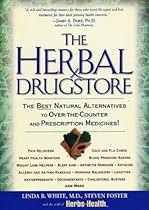 These compounds help neutralize excess estrogen so your body can filter it out. cruciferous vegetables such as cabbage, broccoli, and Brussels sprouts contain another class of chemicals called indoles. They also work to protect breast tissue from excess estrogen. Finally, the culinary immune-boosters garlic, onions, and shiitake mushrooms may help keep your whole system operating healthfully.
Avoid alcohol; also refrain from drinking coffee, tea, and other caffeine-containing foods and beverages. These compounds help neutralize excess estrogen so your body can filter it out. cruciferous vegetables such as cabbage, broccoli, and Brussels sprouts contain another class of chemicals called indoles. They also work to protect breast tissue from excess estrogen. Finally, the culinary immune-boosters garlic, onions, and shiitake mushrooms may help keep your whole system operating healthfully.
Avoid alcohol; also refrain from drinking coffee, tea, and other caffeine-containing foods and beverages. |
Ronald L. Hoffman, M.D.
See book keywords and concepts |  Vegetables contain many cancer-preventive chemicals, especially the cruciferous vegetables: cabbage, broccoli, Brussels sprouts, collard greens, turnips, and cauliflower. Mixed carotenoids from vegetables like carrots are also important for health.
• Add calcium. Calcium has an important role in colon-cancer prevention. Many fruits and vegetables are high in calcium. Calcium combines with bile and harmful fatty acids, inactivating them until they are excreted.
• Add nutrients. Vegetables contain many cancer-preventive chemicals, especially the cruciferous vegetables: cabbage, broccoli, Brussels sprouts, collard greens, turnips, and cauliflower. Mixed carotenoids from vegetables like carrots are also important for health.
• Add calcium. Calcium has an important role in colon-cancer prevention. Many fruits and vegetables are high in calcium. Calcium combines with bile and harmful fatty acids, inactivating them until they are excreted.
• Add nutrients. |
page 11 of 13 | Next ->
FAIR USE NOTICE: The research quoted here is provided under the protection of Fair Use provisions and published by the 501(c)3 non-profit Consumer Wellness Center for the purposes of public comment and education. Authors / publishers may submit books for consideration of inclusion here.
TERMS OF USE: Read full terms of use. Citations of text from NaturalPedia must include: 1) Full credit to the original author and book title. 2) Secondary credit to the Natural News Naturalpedia as a research resource and a link to www.NaturalNews.com/np/index.html
This unique compilation of research is copyright (c) 2008 by the non-profit Consumer Wellness Center.
ABOUT THE CREATOR OF NATURALPEDIA: Mike Adams, the creator of this NaturalNews Naturalpedia, is the editor of NaturalNews.com, the internet's top natural health news site, creator of the Honest Food Guide (www.HonestFoodGuide.org), a free downloadable consumer food guide based on natural health principles, author of Grocery Warning, The 7 Laws of Nutrition, Natural Health Solutions, and many other books available at www.TruthPublishing.com, creator of the earth-friendly EcoLEDs company (www.EcoLEDs.com) that manufactures energy-efficient LED lighting products, founder of Arial Software (www.ArialSoftware.com), a permission e-mail technology company, creator of the CounterThink Cartoon series (www.NaturalNews.com/index-cartoons.html) and author of over 1,500 articles, interviews, special reports and reference guides available at www.NaturalNews.com. Adams' personal philosophy and health statistics are available at www.HealthRanger.org.
|
 |
Refine your search
with Cruciferous...
...and Foods and Beverages:...and Vegetables
...and Broccoli
...and Cabbage
...and Cauliflower
...and Sprouts
...and Vegetable
...and Greens
...and Kale
...and Fruits
...and Tomatoes
...and Health Conditions and Diseases:...and Cancer
...and Breast cancer
...and Cancers
...and Colon cancer
...and Tumors
...and Heart disease
...and Prostate cancer
...and Cancer cells
...and Inflammation
...and Arthritis
...and Key Health Concepts:...and Foods
...and Diet
...and Phytochemicals
...and Disease
...and Chemicals
...and Nutrients
...and Health
...and Hormone
...and Products
...and Symptoms
...and Anatomy:...and Body
...and Breast
...and Cells
...and Liver
...and Colon
...and Blood
...and Prostate
...and Stomach
...and Lung
...and Immune system
...and Adjectives:...and Raw
...and Green
...and Fresh
...and Anticancer
...and Red
...and Whole
...and Natural
...and Frozen
...and Dietary
...and Strong
...and Concepts:...and Risk
...and Studies
...and Source
...and Research
...and Substances
...and Production
...and Damage
...and Sources
...and Study
...and Content
...and Actions:...and Eat
...and Eating
...and Growth
...and Cooking
...and Avoid
...and Rid
...and Drink
...and Taking
...and Making
...and Preventing
...and Physiology:...and Prevent
...and Helps
...and Immune
...and Increase
...and Effects
...and Levels
...and Effect
...and Intake
...and Protective
...and Balance
...and Nutrients:...and Vitamin
...and Antioxidant
...and Vitamin C
...and Beta-carotene
...and Antioxidants
...and Calcium
...and Glutathione
...and Enzyme
...and Lycopene
...and Folic acid
...and Macronutrients:...and Enzymes
...and Seeds
...and Fiber
...and Oils
...and Fats
...and Minerals
...and Calories
...and Protein
...and Fatty acids
...and Salt
...and Objects:...and People
...and Plant
...and University
...and Produce
...and Oil
...and Compound
...and Vitamins
...and List
...and Diets
...and Garden
...and Who:...and Family
...and Women
...and Men
...and Animals
...and Patients
...and Human
...and Doctors
...and Americans
...and Male
...and Children
...and Substances:...and Acid
...and Food
...and Water
...and Extract
...and Acids
...and Bacteria
...and Lead
...and Liquid
...and Heavy metals
...and Metals
...and Plants and Herbs:...and Garlic
...and Leaves
...and Root
...and Green tea
...and Olive
...and Flowers
...and Kelp
...and Ginger
...and Turmeric
...and Roots
...and Hormones and Biochemistry:...and Estrogen
...and Hormones
...and Estrogens
...and Insulin
...and Methionine
...and Stomach acid
...and Steroid
...and Lipids
...and Cortisol
...and Homocysteine
...and Chemicals:...and Carcinogens
...and Pesticides
...and Free radicals
...and Caffeine
...and Carcinogen
...and Aluminum
...and Additives
...and Chlorine
...and Mercury
...and Pesticide
...and Properties
...and Doses
...and Dosage
...and Dose
...and Inhibitors
...and Results
...and Syndrome
...and Interactions
...and Potency
...and Dosages
...and Medical Adjectives:...and Digestive
...and Gastrointestinal
...and Cellular
...and Antibacterial
...and Oral
...and Carcinogenic
...and Adrenal
...and Respiratory
...and Benign
...and Varicose
...and Biological Functions:...and Metabolism
...and Attention
...and Digestion
...and Concentration
...and Vision
...and Memory
...and Weight loss
...and Strength
...and Period
...and Fertility
...and Where:...and United states
...and New york city
...and Chinese
...and New york
...and Asian
...and California
...and Harvard
...and China
...and Europe
...and India
|
Related Concepts:
Vegetables
Cancer
Broccoli
Cabbage
Foods
Cauliflower
Eat
Body
Sprouts
Estrogen
Brussels sprouts
Breast
Diet
Vegetable
Cruciferous vegetables
Enzymes
Breast cancer
Risk
Greens
Kale
Family
Phytochemicals
Acid
Raw
Studies
Cells
Indoles
People
Green
Fresh
Eating
Source
Vitamin
Food
Anticancer
Fruits
Carcinogens
Antioxidant
Tomatoes
Prevent
Women
Cancers
Onions
Sulforaphane
Seeds
Growth
Liver
Disease
Fiber
Colon
Red
Helps
Whole
Chemicals
Research
Garlic
Nutrients
Turnips
Health
Blood
Leafy
Immune
Water
Increase
Effects
Levels
Beans
Wheat
Natural
Beta-carotene
Vitamin C
Plant
Fruit
Hormone
Properties
Substances
Tea
University
Watercress
Prostate
Isothiocyanates
Colon cancer
Cooking
Carrots
Fish
Spinach
Production
Avoid
Oils
Grains
Antioxidants
Effect
Tumors
Damage
Cancer-fighting
Fruits and vegetables
Stomach
Produce
Intake
Sources
|









 Email this page to a friend